

Table of Contents
- Why Flexibility Matters and What to Expect
- Getting Started: What You Need and How to Prepare
- Daily Stretches to Improve Flexibility
- Beginner Flexibility Exercises at Home
- How Often to Stretch for Flexibility
- Mobility Exercises for Beginners
- Safety, Pain Signals, and Modifications
- Measuring Your Progress
- Frequently Asked Questions
Last Updated: October 10, 2026
Why Flexibility Matters and What to Expect
Flexibility is your body's ability to move through a full range of motion without pain or restriction.
Most people expect dramatic changes overnight. That's unrealistic. Real flexibility gains take weeks of consistent work. But here's the good news: you'll notice small improvements within 7-10 days if you stretch daily. Your joints will feel looser.
The ones who see real results follow a simple pattern: they stretch regularly, they don't push into pain, and they stick with it for at least 4 weeks. That's when the changes become obvious.
The timeline depends on where you start. If you're very stiff now, expect 4-6 weeks to feel a real difference. If you're already somewhat flexible, you might see progress in 2-3 weeks.
Getting Started: What You Need and How to Prepare
You don't need much to improve flexibility at home. A yoga mat helps. So does a stretching strap. But honestly, you can start with just a clear space on your floor.
Here's what makes a real difference:
- A quiet space where you won't be interrupted for 10-15 minutes
- Comfortable clothes that let you move freely
- A mat or towel to cushion your joints
- Good lighting so you can see your form
- A water bottle nearby to stay hydrated
The 13-Piece Yoga & Pilates Set from KEYFAITH Stores includes a yoga mat, stretching strap, resistance bands, and other tools that work well for beginners.

Before you stretch, warm up your body. Walk around for 2-3 minutes. Do some gentle arm circles. Swing your legs loosely. A warm body stretches better and gets injured less often.
Pick a time you'll actually do it. Morning works well for many people. You're less busy, your mind is clearer, and stretching energizes you for the day. Evening works too, especially if you sit all day.
Daily Stretches to Improve Flexibility
The best stretching routine is one you'll actually do. Start with just 10 minutes a day. You can add more later.
Hold each stretch for 20-30 seconds. Don't bounce. Breathe slowly and deeply. Bouncing can injure your muscles. Steady, gentle pressure works better and is safer.
Lower-body stretches for hamstrings and hips
Your hamstrings (back of your thighs) and hips are where most people feel stiffness first. These areas tighten from sitting, from running, from everyday life. Loosening them makes walking and bending easier.
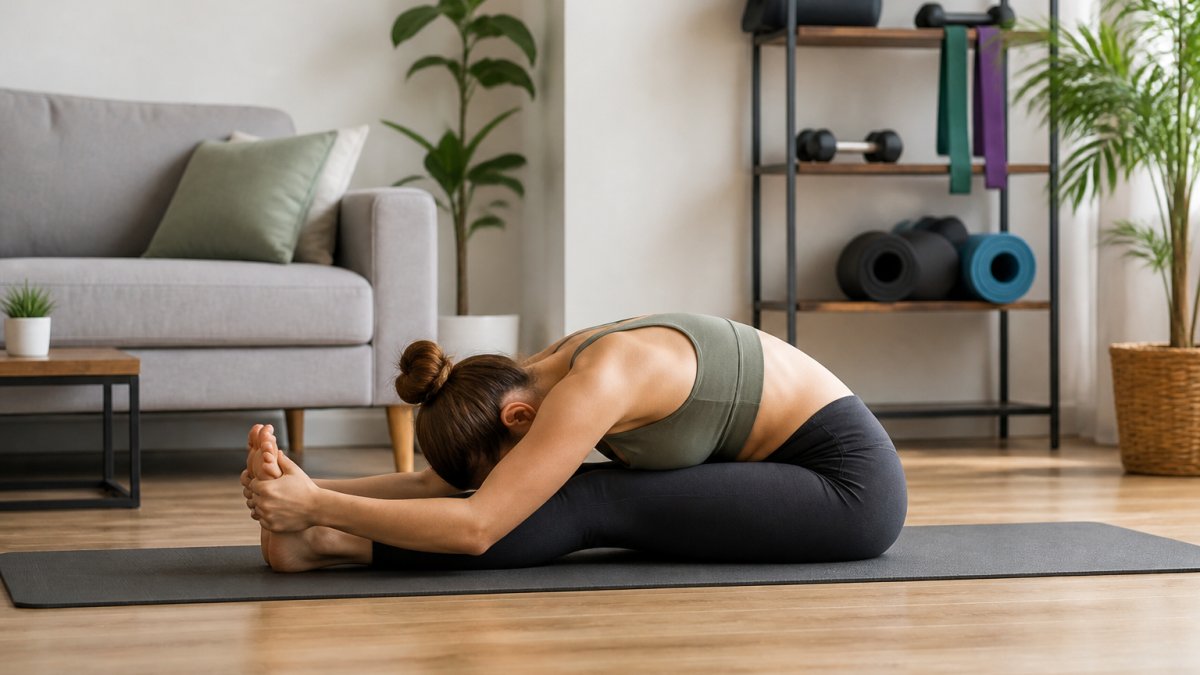
Seated forward fold: Sit on the floor with your legs straight out in front of you. Keep your back straight.
Lying figure-four stretch: Lie on your back. Bend one knee and place that ankle across the opposite knee, creating a figure-four shape. Gently pull the bottom leg toward your chest.
Lunge stretch: Step one foot forward into a lunge position. Keep your back heel on the ground. Lean your hips forward gently.
Hip circles: Stand on one leg. Lift the other knee up and slowly make big circles with it. Go both directions.
Back and spine mobility work
A stiff back limits almost everything you do. Improving your spine's mobility reduces pain and makes daily movement easier.
Cat-cow stretch: Get on your hands and knees. Arch your back and look up gently (cow position). Then round your spine and tuck your chin (cat position). Flow between these slowly, matching your breath to the movement. Do 8-10 repetitions.
Lying spine twist: Lie on your back. Pull one knee toward your chest, then gently twist it across your body toward the opposite side. Keep your shoulders flat on the floor. Hold it.
Sphinx pose: Lie on your stomach. Place your forearms on the ground, elbows under your shoulders. Press your chest forward gently. You'll feel a mild stretch across your chest and front of your shoulders. This is gentler than a full backbend and safer for beginners.
Shoulder and neck mobility
Tight shoulders and neck cause headaches and limit how freely you can move your arms. These stretches open up your upper body.
Shoulder rotation: Stand with arms at your sides. Slowly rotate your shoulders backward 10 times, making big circles. Then rotate forward 10 times. This wakes up your shoulder joint.
Neck stretches: Gently tilt your head toward one shoulder, feeling a stretch on the opposite side of your neck. Hold for 15 seconds. Then tilt the other way. Do this slowly. Never force your neck.
Doorway chest stretch: Stand in a doorway. Place one forearm on the doorframe with your elbow at shoulder height. Lean forward gently until you feel a stretch across your chest. Hold it. This opens up your shoulders and chest, which get tight from sitting hunched at a desk.
Beginner Flexibility Exercises at Home
Stretching alone helps. But adding light exercises builds strength and flexibility together. You don't need heavy weights or complicated moves. Simple bodyweight exercises work perfectly.
Yoga-inspired poses for full-body range of motion
Yoga poses combine stretching with light strength work. They improve your range of motion while building stability.
Downward-facing dog: Start on your hands and knees. Press your hands flat on the ground. Lift your hips up and back, forming an upside-down V shape with your body.
Child's pose: Kneel on the ground. Sit your hips back toward your heels. Stretch your arms forward on the floor. Rest your forehead down.
Garland pose: Squat down with your feet about hip-width apart. Keep your heels on the ground if you can (if not, that's fine, rest them on a rolled towel). Lean forward slightly.
Warrior pose: Step one foot forward into a lunge. Keep your back heel on the ground at about a 45-degree angle. Raise your arms overhead.
A progressive 4-week routine
Start with Week 1 and spend a full week on it before moving forward. This gradual approach prevents injury and builds sustainable habits.
Week 1: Foundation (10 minutes daily)
- Cat-cow: 1 minute
- Seated forward fold: 30 seconds each side
- Child's pose: 1 minute
- Downward-facing dog: 30 seconds
- Lunge stretch: 30 seconds each side
- Lying spine twist: 30 seconds each side
- Shoulder rotation: 1 minute
- Rest and breathe: 2 minutes
Week 2: Adding depth (12 minutes daily)
- Everything from Week 1
- Add lying figure-four stretch: 30 seconds each side
- Extend downward-facing dog to 1 minute
- Add garland pose: 30 seconds
- Add doorway chest stretch: 30 seconds each side
Week 3: Building strength (14 minutes daily)
- Everything from Week 2
- Add warrior pose: 30 seconds each side
- Add sphinx pose: 30 seconds
- Extend lunge stretches to 1 minute each side
- Add hip circles: 1 minute total
Week 4: Full routine (15 minutes daily)
- All stretches from previous weeks
- Hold each stretch for 30-45 seconds instead of 20-30
- Add a second round of your favourite stretches
- Move more slowly and deliberately
After Week 4, you've built a solid foundation. You can stay with this routine or add more advanced stretches. The important thing is that you've created a habit.
How Often to Stretch for Flexibility
Daily stretching beats occasional long sessions. Your body responds better to consistent, gentle work than to intense stretching once a week.
Aim for at least 5 days per week. Six or seven is better if you can manage it. Even 10 minutes daily produces real results. Thirty minutes twice a week won't work as well.
If you miss a day, don't worry. Just pick it back up the next day. Consistency matters more than perfection. A routine you do 80% of the time beats a perfect routine you abandon after two weeks.
The best time to stretch is when you'll actually do it. Some people stretch first thing in the morning. Others prefer evening. A few stretch during their lunch break. Pick whatever time fits your life, and you'll stick with it longer.
Mobility Exercises for Beginners
Mobility is slightly different from flexibility. Flexibility is how far you can stretch a muscle.
Mobility exercises often involve movement, not just holding stretches. They warm up your joints and teach your body how to move safely.
Arm circles: Stand with your arms out to your sides. Make small circles forward 10 times. Then make small circles backward 10 times.
Leg swings: Hold onto something stable. Swing one leg forward and backward in a controlled way, 10 times each direction.
Torso twists: Stand with your feet hip-width apart. Place your hands behind your head or crossed on your chest.
Glute bridges: Lie on your back with knees bent and feet flat on the floor.
These exercises work well paired with stretching. Do them before your stretching routine to warm up.
Safety, Pain Signals, and Modifications
Stretching should never hurt. A gentle pulling sensation is normal. Sharp pain is not. Learn the difference.
Good stretch feeling: A mild, steady pull in the muscle. It feels slightly uncomfortable but not painful. You can breathe easily. You could hold it longer if you wanted to.
Pain signal to stop: Sharp, shooting pain. Tingling or numbness. Pain in your joints rather than muscles. Intense discomfort that makes you hold your breath.
Modifications let you do stretches safely at your current level. Use them without guilt.
- Can't touch your toes? Bend your knees. Or place your hands on your shins instead of the floor.
- Lunge feels too intense? Lower your back knee to the ground. You'll still feel the stretch.
- Garland pose is too deep? Stay higher up, resting your hands on the ground for support.
- Neck stretches cause discomfort? Make the movement smaller. Never force your neck.
Never bounce or jerk into a stretch. Never push through sharp pain. Never compare yourself to other people. Your flexibility journey is your own.
If you have an old injury or chronic pain, talk to a healthcare provider before starting. They can tell you which stretches are safe for you.
Measuring Your Progress
Progress isn't always obvious. You won't wake up one day suddenly flexible. But small changes add up.
Track these signs of improvement:
- Bending forward: Can you reach further down your legs each week?
- Squatting: Can you squat deeper while keeping your heels on the ground?
- Daily life: Do stairs feel easier? Can you pick things up without stiffness?
- Morning stiffness: Does it take less time to feel loose when you wake up?
- Soreness after exercise: Do you recover faster after workouts?
Write down where you can reach right now. Mark it on your leg or wall. In 4 weeks, check again. You'll likely be surprised at the difference.
Take photos of yourself in stretches if that helps. Photos show progress that you might not notice day to day.
Don't expect to touch your toes in two weeks if you can't now. But in 8-12 weeks of daily stretching, most people can. That's real, measurable progress.
Frequently Asked Questions
How long does it take to improve flexibility at home?
Most people notice measurable improvements in flexibility within 2-3 weeks of consistent daily stretching, though significant gains typically appear after 6-8 weeks. Progress depends on your starting point, consistency, and how you stretch. Younger individuals may see faster results, while those over 40 might progress more gradually but still achieve substantial gains. The key is regular practice rather than intensity.
Can you improve flexibility with stretches at home without equipment?
Yes, you can improve flexibility using bodyweight stretches alone. However, equipment like a yoga mat, stretching strap, or yoga ring can deepen stretches and reduce strain on joints. A 13-piece yoga and pilates set (£59.66) includes stretching straps and resistance bands that help beginners achieve proper form and safely increase range of motion, making progression easier.
How often should I stretch to see flexibility improvements?
Stretch daily for best results, ideally 10-15 minutes per session. Daily stretches to improve flexibility compound over time, whereas stretching 2-3 times per week produces slower gains. Consistency matters more than duration. Even brief daily stretching sessions outperform occasional longer sessions.
Are mobility exercises the same as stretching?
No, they're complementary but different. Stretching lengthens muscles and increases range of motion, while mobility exercises for beginners improve joint movement and stability through controlled motion. Mobility work often includes gentle rotations, circles, and dynamic movements, whereas stretching is typically static. Both are essential for overall flexibility.
Improving your flexibility takes consistency and patience, but the payoff is worth it. Better mobility makes daily life easier, reduces injury risk, and helps you feel stronger overall. The KEYFAITH Stores 13-Piece Yoga & Pilates Set gives you everything you need to build a sustainable routine at home. Start with Week 1 of the progressive routine, stretch daily, and track your progress. In 4 weeks, you'll feel the difference.